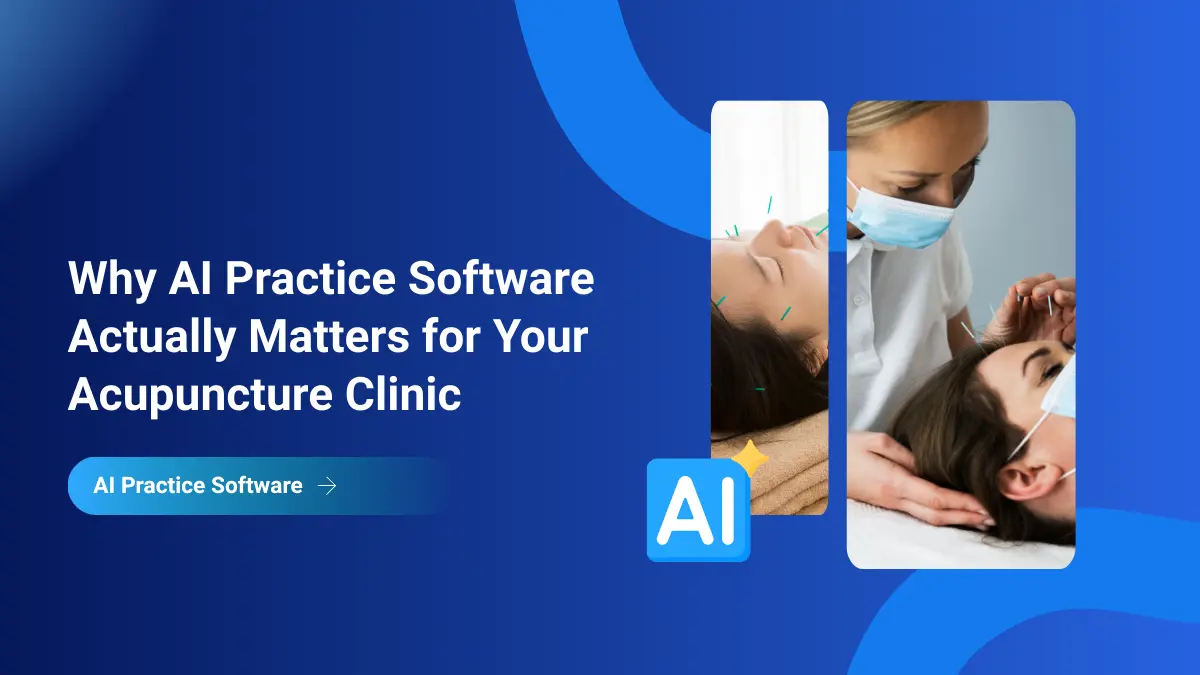
Let’s be honest: you didn’t get into acupuncture to spend half your day chasing no-shows, sending reminder texts, or wondering why that patient who was doing so well just… disappeared.
But here we are. Your phone won’t stop buzzing, your schedule has gaps you can’t fill, and you’re pretty sure you documented that last treatment plan somewhere but can’t quite remember where.
Sound familiar?
Here’s the thing: the patients coming through your door in 2026 expect a different experience than they did five years ago. They want to book online at 11 PM. They expect you to remember what worked last time. They need reminders because, let’s face it, they’re juggling a lot too.
And you? You’re trying to run a healing practice while also being the receptionist, the follow-up coordinator, the billing department, and somehow still having energy left to actually treat people.
This is where AI-driven practice management software stops being “tech stuff” and starts being the thing that lets you practice acupuncture again.
The Real Problems Facing Your Clinic Right Now
Walk into any acupuncture clinic today and you’ll hear the same challenges:
- More patients want what you do (which is great!), but they also expect instant booking, quick responses, and that you’ll somehow remember everything about their case when they walk in three weeks later.
- Your retention numbers aren’t where they should be. You know acupuncture works best as a series of treatments, but patients drop off after two or three visits. Not because the treatment isn’t working, but because nobody reached out when they missed that fourth appointment.
- If you have multiple practitioners, scheduling is a nightmare. Who’s good with fertility cases? Who has openings for that emergency low back pain? Who’s running behind because their 11 AM turned into a 45-minute intake?
- Documentation takes up your time and evenings. You know you need good notes for continuity of care and liability protection. But writing them? That’s another 15 minutes you don’t have.
The solution isn’t just “get software.” You probably already have software. The solution is getting software that thinks ahead for you.
What AI-Driven Actually Means
When we say “AI-driven practice management,” we’re not talking about a robot that does acupuncture for you or some creepy chatbot pretending to be a practitioner.
We’re talking about software that looks at your clinic’s patterns and says: “Hey, based on the last 200 patients who came in with low back pain, here’s what usually works for scheduling. Here’s when they typically drop off. Here’s the reminder that gets them to actually show up.”
It’s the difference between a calendar app and a system that learns your clinic.
Here’s what it actually does:
- Keeps all your patient records, appointments, and treatment plans in one place (basic practice management)
- Handles your communication, texts, emails, patient portal messages (still basic, but important)
- Runs automations so things happen without you remembering them (now we’re getting somewhere)
- Learns what works in your clinic and suggests the next best step (this is the AI part)
How to Use AI in Acupuncture Practice:
1.Smarter AI Scheduling Systems
Missed appointments are a persistent operational challenge for acupuncture clinics. No-shows reduce revenue, disrupt practitioner schedules, and limit patient access to care. AI-driven scheduling tools address these issues by improving how appointments are booked, confirmed, and maintained.
a. Booking Appointments From Calls
Many acupuncture appointments are still booked over the phone, especially for new patients. AI-enabled systems can assist by:
- Automatically logging call outcomes
- Connecting call bookings to patient records
- Triggering confirmation messages immediately after booking
- Flagging incomplete bookings for follow-up
This reduces reliance on manual data entry and ensures that phone-booked appointments follow the same confirmation and reminder process as online bookings.
b. How AI Identifies Patients at Risk of Canceling
AI-driven systems analyze historical scheduling behavior to identify risk factors associated with cancellations or no-shows. These may include:
- Prior missed appointments
- Long gaps between visits
- Short-notice bookings
- Visit types with higher cancellation rates
By recognizing these patterns early, the system can apply preventive actions before an appointment is missed.
c. Behavior-Based Reminders vs. Generic Reminders
Traditional reminder systems send the same message to every patient at the same interval. AI-driven automated reminders for acupuncture practices adjust email and SMS messages based on patient behavior, such as:
- Preferred reminder timing
- Communication channel response history
- Likelihood of rescheduling
This approach improves attendance rates by delivering reminders in a way that aligns with individual patient habits rather than a one-size-fits-all schedule.
d. Making Rescheduling Easy Before a No-Show Happens
When patients anticipate missing an appointment, the ease of rescheduling plays a critical role. AI-enabled systems can:
- Detect non-responses to reminders
- Offer rescheduling links automatically
- Prioritize available time slots
- Notify staff of high-risk appointments
These steps help convert potential no-shows into rescheduled visits, preserving continuity of care.
[Read More: Acupuncture Practice Growth Playbook]
2. Patient Retention with AI Software
Patient retention is a critical factor in the success of an acupuncture clinic. While attracting new patients is important, long-term outcomes and clinic stability depend largely on whether patients continue care as recommended. AI-enabled practice software supports retention by addressing the practical reasons patients disengage, without relying on constant manual follow-up.
a. Why Retention Is Especially Important in Acupuncture Care
Acupuncture is rarely a single-visit solution. Many conditions, such as chronic pain, stress-related disorders, fertility support, and rehabilitation, require consistent, ongoing sessions to achieve meaningful results.
However, patient drop-off often occurs not because treatment is ineffective, but because:
- Appointments are easy to forget
- Scheduling follow-ups feels inconvenient
- Patients are unsure about the next step in their care plan
- Life interruptions break treatment momentum
Retention challenges are therefore operational as much as clinical.
b. How AI Software Supports Continuity of Care
AI-driven practice software helps maintain treatment continuity by monitoring visit patterns and identifying gaps in care. When a patient deviates from their typical visit schedule or recommended frequency, the system can trigger appropriate follow-up actions automatically.
These actions may include:
- Reminders aligned with expected treatment intervals
- Check-in messages after missed or delayed visits
- Prompts to schedule the next appointment
Because these actions are based on actual patient behavior, they occur at moments when engagement is most likely to be effective.
c. Follow-Ups That Feel Supportive, Not Sales-Oriented
One of the biggest concerns clinics have about automation is that it may feel impersonal or overly promotional. AI-driven follow-ups are designed to address care continuity, not sales conversion.
Instead of generic outreach, messages are triggered by:
- Time since last visit
- Care plan milestones
- Changes in visit frequency
This makes communication feel timely and relevant, reinforcing the patient’s care journey rather than pressuring them to book.
3. Personalized Communication at Scale
Patients do not all communicate in the same way. Some prefer quick text messages, others respond better to email, and some engage only when communication is minimal and timely. When clinics rely on one standard communication method, engagement often drops.
AI-driven practice software adapts communication based on patient behavior rather than assumptions. Over time, it learns how each patient interacts with messages and adjusts delivery accordingly.
Key ways this works include:
- Identifying preferred communication channels
- Adjusting timing based on response patterns
- Reducing message frequency for less responsive patients
- Reinforcing consistency without over-communication
As clinics grow, maintaining this level of personalization manually becomes difficult. AI enables clinics to scale patient communication while preserving relevance and tone, helping patients feel supported rather than automated.
This also eases front-desk workload. When routine communication is handled automatically, staff can focus on higher-value interactions such as answering questions, assisting with complex scheduling needs, and providing in-clinic support, without losing warmth or personal connection.
4. Less Admin, More Time for Healing
Administrative work often expands quietly until it becomes overwhelming. Scheduling, reminders, follow-ups, and documentation may seem manageable individually, but together they create a significant time burden.
Manual processes carry hidden costs:
- Repeated data entry
- Missed or inconsistent follow-ups
- After-hours administrative work
- Increased mental fatigue during clinic hours
AI-driven automation in acupuncture clinics reduces this load by ensuring routine tasks happen reliably without constant oversight. Instead of remembering what needs to be done next, staff can rely on the system to trigger actions automatically based on clinic workflows.
This shift helps practitioners and teams:
- Reclaim evenings and weekends
- Reduce interruptions during patient care
- Maintain focus and consistency throughout the day
Burnout is a major risk in healthcare, especially for solo practitioners and small clinics. Reducing administrative pressure is essential for long-term sustainability, and automation plays a key role in supporting practitioner well-being.
5. Turning Clinic Data into Actionable Insights
Most clinics already collect large amounts of data, but much of it remains unused. Reports are often generated only when necessary and rarely reviewed in depth, limiting their impact on day-to-day decision-making.
AI-driven analytics systems move beyond static reports by continuously analyzing clinic activity and highlighting meaningful patterns. Instead of asking staff to search for insights, the system surfaces them automatically.
Examples include:
- Trends in appointment cancellations or no-shows
- Drop-off points in multi-visit care plans
- Differences in engagement by service type or time of day
- Communication patterns that influence attendance
By translating data into clear signals, AI helps clinics make informed operational decisions without spreadsheets or manual analysis. This supports better scheduling, improved patient retention, and more predictable clinic performance.
Conclusion: Using AI to Support Better Care, Not Replace It
AI-driven practice software is not about changing how acupuncture is practiced. It does not replace clinical expertise, intuition, or the practitioner–patient relationship. Its role is much simpler and more practical: to reduce operational friction so care can remain consistent, focused, and sustainable.
For acupuncture clinics, the biggest challenges are rarely clinical. They are administrative, missed appointments, inconsistent follow-ups, disengaged patients, and growing mental load for practitioners and staff. AI addresses these issues by bringing structure, consistency, and intelligence to everyday clinic operations.
When scheduling is smarter, communication is personalized, and follow-ups happen reliably, patients are more likely to stay engaged in their care. At the same time, practitioners gain back time, energy, and focus, critical factors for long-term clinic health.
Adopting AI in practice management is less about technology and more about building a system that supports both patient outcomes and practitioner well-being.
How zHealth Supports AI-Driven Acupuncture Practices
zHealth is designed specifically for practices that depend on ongoing patient engagement, such as acupuncture clinics. Rather than adding complexity, it uses AI to simplify how clinics manage scheduling, communication, and follow-ups.
At a foundational level, zHealth provides core practice management features, patient records, appointments, documentation, and billing, within a single, cloud-based system. On top of that foundation, AI-driven workflows help clinics operate more consistently without relying on manual effort.
zHealth uses patient behavior and clinic patterns to support:
- Smarter appointment reminders that reduce no-shows
- Automated follow-ups aligned with treatment timelines
- Personalized communication across text, email, and patient portals
- Early identification of patients at risk of dropping off care
Because these actions are triggered by real clinic activity, communication remains relevant and supportive rather than generic or promotional. This helps patients stay connected to their care plan while reducing the burden on front-desk teams.
By handling routine operational tasks in the background, zHealth allows acupuncture clinics to focus on what matters most, delivering effective care, maintaining strong patient relationships, and building a sustainable practice without burnout.
Related articles:
Breaking The Silos: How Acupuncture Practice Management Software Eliminates Costly Inefficiencies
11 Essential KPIs For Sustainable Acupuncture Practice Growth
2026 Acupuncture Patient Experience Playbook
How Scheduling Software Optimizes Your Acupuncture Practice
Simplify Billing: Steps To Boost Collections For Acupuncturists